What Is Carbon Sequestration? | Patch
Superpollutants: How market mechanisms can pull the emergency brake of climate change
Greenhouse gases like carbon dioxide, nitrous oxide, and methane contribute to climate change daily by absorbing heat and raising the Earth’s overall temperature. The Paris Agreement focuses on a goal of limiting temperature rise to 2 or even 1.5 degrees Celsius in the twenty-first century. A temperature increase of more than 2 degrees Celsius could have devastating long-term effects, such as destruction of coastal communities, massive food shortages, and large-scale weather disasters.
Of the greenhouse gases, CO2 accounts for the largest percentage of emissions, so climate scientists track the amount of carbon dioxide (CO2) in the atmosphere. 350 ppm (parts per million) is considered safe, and is the current goal of climate activists. Before industrialization, that number was about 280 ppm. In 2020, it was over 400 ppm, or parts per million. We can’t meet the Paris Accords’ goals to limit global warming without also working toward safe ppm levels.
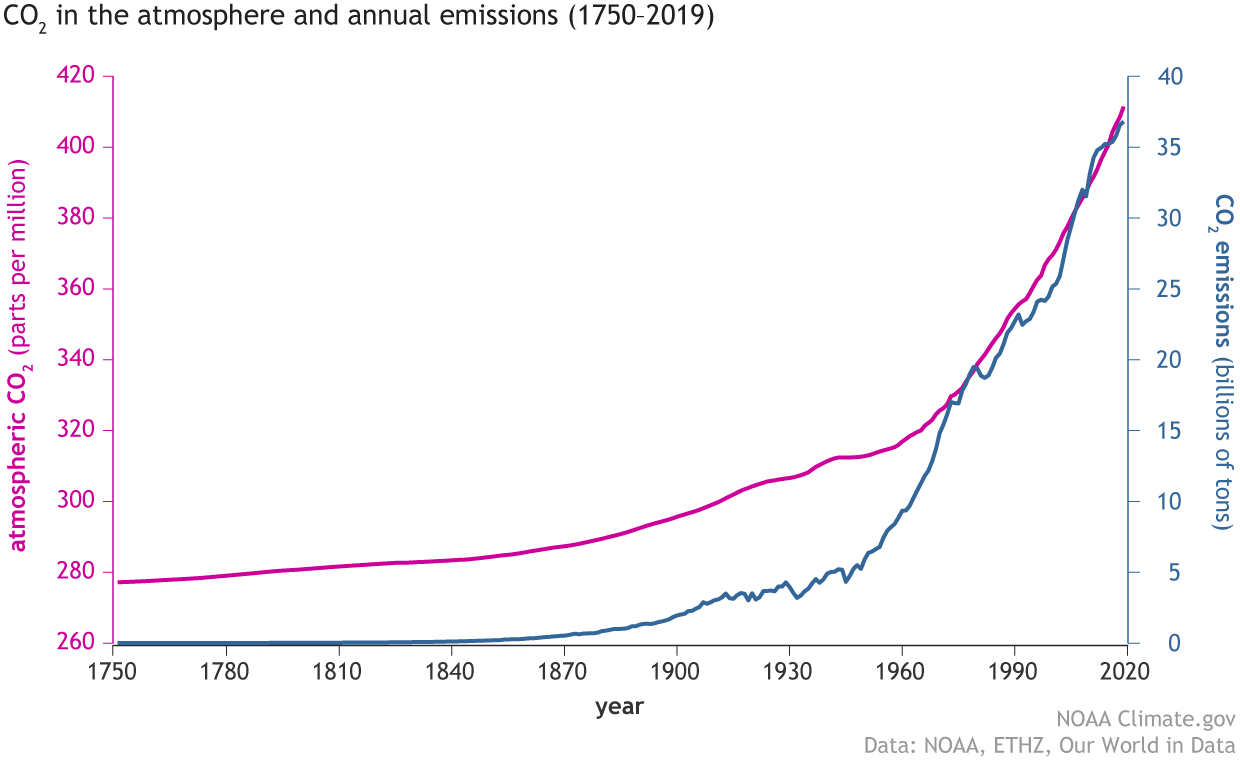
Meeting those goals will require a multi-pronged approach. Governments and industries will need to reduce emissions and switch to renewable energy. But scientists and innovators are also working to invent ways to remove CO2 from the atmosphere on a large scale, essentially hitting reverse on some of the damage that rapid human industrialization has done to the natural balance of Earth’s ecology. There are a host of promising carbon sequestration technologies that could reverse climate change if deployed quickly and effectively.
What is carbon sequestration?
“Carbon sequestration” is the term for removing carbon dioxide from the air and storing it somewhere else in a stable form where it won’t be released again. It can be sequestered in a variety of places, such as soil, forests, and even our oceans, or it can be repurposed to create new products.
While the terms “carbon sequestration” and “carbon removal” may be used synonymously, there are a few other terms to be aware of when talking about removing and storing carbon. They sound similar, but work very differently. Making the distinction matters because their overall climate outcomes are very different.
- Carbon removal and sequestration is the process of removing existing carbon dioxide from the atmosphere or biomass and putting it away in long-term storage like geological formations, oceans, forests, or soil. This has a carbon-negative effect and the ability to reduce global temperatures.
- Carbon capture and use (CCU) is the process of removing carbon dioxide from either the atmosphere, biomass, or the burning of fossil fuels and recycling it to make new products. While this is better than releasing it directly into the atmosphere, it does not have a carbon-negative effect on global greenhouse gas levels, because it emits greenhouse gases in the process.
- Carbon capture and storage (CCS) is the process of capturing and storing carbon released from the burning of fossil fuels at their source (usually factories and power plants). While this is also better than releasing it directly into the atmosphere, it does not have a carbon-negative effect on global greenhouse gas levels because it is removing only the carbon dioxide created by the factory or plant versus removing additional atmospheric carbon dioxide.
3 carbon sequestration strategies
Carbon dioxide removal strategies fall under two umbrella categories: geological and biological storage. Each category has a variety of methods, each of which has its own set of co-benefits and risks that are being constantly iterated upon in the pursuit of viable climate change solutions.
Geological storage
Most often used in CCS and CCU, geological storage involves either direct air capture from ambient air or capturing carbon from industrial plants or oil wells, pressurizing it until it becomes liquid, and pumping it underground, where it cannot escape. Carbon can also be injected into the ocean floor.
Co-benefits: Pure geologic carbon storage doesn’t come with notable co-benefits, as this avenue of storage is essentially burying carbon for the sake of burying it. There is no economic or ecological benefit; rather, the focus is on removing carbon and storing it where it cannot escape.
Potential Risks: If not executed safely and properly, geological carbon sequestration could have adverse effects. One risk involves CO2 leaking into groundwater, including stores of drinking water, possibly contaminating it. The CO2 could also leak into above-ground buildings, where it could reduce oxygen levels. Or, it could simply leak out into the atmosphere, defeating the purpose of sequestering it.
Potential Impact: Carbon stored underground has the potential to remain there for millions of years. If the risks can be mitigated, geological carbon sequestration can offset some of the most harmful pollution caused by industry on a large scale.
Biological storage
Biological carbon sequestration is a naturally occurring phenomenon—natural carbon storage is what gave us fossil fuels in the first place. Additionally, when plants photosynthesize, they store carbon they don’t use for growth in the soil they’re planted in. To restore balance, many scientists believe we must similarly intervene in this natural process.
There are several ways of manipulating biological storage to remove atmospheric CO2.
- Sequestration in the soil: Carbon naturally occurs in soil, and can be stored there via regenerative farming practices or by the creation of biochar, a charcoal-like substance that acts as a vehicle for carbon storage as well as a natural fertilizer and moisture trapping system.
- Sequestration in the seas: Types of ocean-related carbon sequestration methods include encouraging the growth of plankton and seaweed.
- Sequestration in the forests: Reforestation coupled with forest management can be a major contributor to natural carbon storage.
Co-benefits: Reforestation and soil storage both offer a host of co-benefits including a reduction in overall biowaste, more efficient ecological growth and an overall increase in the ecological health of the planet outside of the original goal of reducing atmospheric carbon.
Potential Risks: Different risks are associated with the different methods of biological storage.
- Forests: The key to successful reforestation projects is ensuring that the forest is always in balance: excess waste should be correctly disposed of or converted into biochar to prevent creating new risks through forest fires. Regulation is also important for reducing illegal logging activity.
- Oceans: Ocean-based carbon sequestration techniques carry the risk of carbon leaking back out into the oceans, which could adversely affect marine life due to ocean acidification.
Potential Impact: Since biological sequestration closely mimics the Earth’s natural processes and offers co-benefits, it’s estimated that implementing biochar in agriculture could significantly impact our collective carbon footprint. Through global cooperation and a commitment to investing in new sequestration technologies, we could potentially meet global climate goals.
Recycling
Captured carbon can also be recycled into products used in construction projects, like CarbonCure’s recycled CO2 concrete, or ClimeWorks and Carbfix’s thermal carbon capture facility, which uses mineralized CO2 as part of the plant.
Co-benefits: Recycling CO2 into products makes carbon sequestration economically attractive to stakeholders. Innovative companies like CarbonCure are recycling CO2 into everyday products, such as the BluePlanet aggregate used in constructing the San Francisco International Airport.
Carbon can be used to make various products: Air Co. in Brooklyn uses CO2 to make vodka, and Carbon Upcycling Technologies has partnered with a design studio to create a carbon watch. Provided these products aren’t quickly discarded, recycling carbon into long-lasting products could become part of everyday life.
Risks: The main risks of carbon recycling relate to the permanence of captured CO2—it may be sequestered in building materials like concrete for decades but only for a short period in fuels like methanol. The climate impact associated with carbon recycling can be overstated.
Potential Impact: Economic incentives can be change agents. Creating a market for recycled CO2 can significantly reduce emissions and create ongoing opportunities for companies addressing this waste stream.